Some love for Seconds:
LitStack. A Short Novel Packed with Insight and Feeling

(follow link above for complete review by Robert Thomas)
For Double Negative:
The Rumpus. “Learning from Grief: Claudia Putnam’s Double Negative
“Double Negative transcends its own title, at least for the reader. In a world so full of self-justification and blaming, Putnam’s eloquent and unflinching definition of her own tested truths—clinical, psychological, philosophical, relational—is itself a challenging inspiration.” (David Weber)
Community of Literary Magazines and Presses, 2022 Year-End nonfiction roundup
Selected by Jenny Boully as the winner of the 2021 SLP Nonfiction/Hybrid Chapbook Contest, Double Negative “explores the aftermath of losing a child, the questions of grief, and the impossibility of choice.”
Literary Mama: Exploring Life Through Death, a Review of Double Negative
There were times when I wondered if navigating this ocean of grief alone may have been a strange blessing. It allowed Putnam to explore the depths of her grief through her own uniquely brilliant mind, to search for her own meaning without the centuries of accumulated attempts to explain the unexplainable or the religious doctrines that may ultimately trivialize death, as if a certain prayer or ritual could magically heal a mortal wound. (Carmel Mawle)
New Pages: Book Review:: Double Negative by Claudia Putnam
Putnam is cerebral but genuine, her prose approachable. She contemplates life and death, the soul, where and how it arrives and departs, the beforehere and the afterhere. (Mark Guzman)
Psychology Today: Why Would Parents Choose Hospice Care for their Newborn?
Putnam also finds solace and sense in the writings of others who’ve pondered the intersections of life and death through many lenses, including philosophy, literature, physics, mathematics, and medical ethics. For example, she considers this quote by poet Louise Glück: “To get born, your body makes a pact with death, and from that moment, all it tries to do is cheat.” (Deborah L. Davis)
Hippocampus Magazine (interview with Lara Lillibridge)
LL: I was at a writing workshop with a neonatal surgeon, and he talked about how a part of his job was convincing parents that oftentimes just because they can do something doesn’t mean they should, and that sometimes deciding to prolong life and do all of these heroic measures is far worse for the baby and the whole family. And that it’s so hard for parents to understand that.
CP: Yeah. I mean, especially when the child was just born, because everything in that being and everything in you is programmed to start your engines, and so to let go when you just gave birth, and you’ve been carrying this baby with so much anticipation — I think it’s understated what women go through in pregnancy. I mean, not just the spiritual process and the transformation that can occur, but also, you can be a different person on the other side of birth than you were, and then wait till you get to raise the kid, you will really be a different person.
It’s a very liminal experience for women — I mean, you’re between states. But it’s also, physically hard. I mean, you build a human being, and people are like, ‘Okay, well, when are you gonna have another one?’
The CHAPBOOK Podcast (with Noah Stetzer & Ross White)
NS: It reminded me… of math homework where you have to show your work in that you shared the hard work [involved in] working through grief…your willingness to explore all those aspects…in such a tight space.
Awakening Spirituality: The Promises We Carry (Craft Discussion on YouTube)
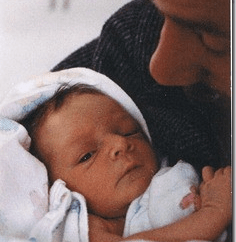
Some stories live in us for years, waiting for the right time to appear. Claudia’s story of her first child, Jacob, will live on in her chapbook, Double Negative—meaning that Jacob will live on long after his imperfect infant heart failed him.
For The Land of Stone and River:
Good River Review: Review: The Land of Stone and River by Claudia Putnam
Claudia Putnam’s extraordinary debut poetry collection, The Land of Stone and River, is a sustained engagement with the deep histories and wide vistas of the exterior and interior landscapes that are her subjects. The winner of the Moon City Poetry Award, the book brilliantly explores the lands of stone and river in the specific Western territories where she has lived or travelled, as well as the interior vistas of the mind and body. Ambitious poems across three sections travel through natural, historical, and mythological histories, often asking hard questions about our place in the natural world and its indifference to us. (Lynnell Edwards)
The Writing Disorder: Claudia Putnam Book Review
If you want to experience the awe I felt while reading The Land of Stone and River, you will have to study this book. You will have to google many unfamiliar terms. It is not an easy book to read and will not bring you peace. That is why you should read it. (Risa Denenberg)
The Colorado Poet: Flowering Within the Landscape of Sorrow, a Conversation with Claudia Putnam, Winner of the Moon City Poetry Prize (interview with Kathryn Winograd)
KW: I discovered the term, “After” poems,” after reading your poem, “Poetics,” which offers the epigraph, “With appreciation to Carolyn Forché and Robert Bly.” I recognized some of their images in your poem. “After” poems can be tricky if you don’t acknowledge the original sources, which you do, but can you talk a bit about bringing in other voices or presences into your poems? Besides the “after” poem, you have some found poem sections, some reference text, epigraphs, quotes etc. Susan Tichy, who I interviewed for her new book, North|Rock|Edge, talks about “coring” from other texts. Why might a poet want to “borrow” language from other poems?
CP: An “After” poem is about echoing form and tone. Poetry, like all art, is in constant conversation with itself. Robert Bly’s “Living at the End of Time,” while nostalgic, has a more celebratory tone than my own work does, generally. When I wrote “Poetics,” I was reading a lot of Bly and listening to Carolyn Forché’s memoir, What You Have Heard is True. Forché’s poem, “The Colonel,” is a touchstone for me, never failing to bring the lump in the throat that Frost said was the origin of any poem. I’ve taught “The Colonel” in my poetry appreciation classes in part because it makes us ask what is poetry and what is prose. At the same time, I was thinking, because I write fiction, about what plot is. The idea of it comes from Aristotle’s Poetics. I kept going back to Forché’s image of the moon sweeping back and forth on this invisible line, which I also employ in “Earth Shadow.” And there’s Chekhov’s rule that a gun at the beginning of a story has to go off by the end. I wrote the poem, saw the Forché, felt the Bly, and then revised it into an “After” poem. My long piece, “Reading Octavio Paz,” is also an “After” poem: I experimented with Paz’s structures, bringing in my own experiences, which I had been working to express for several years.
KNAU Arizona Public Radio: Poetry Snaps! Claudia Putnam: Baba Yaga (with Steven Law & Gillian Ferris)
In this week’s installment of KNAU’s series PoetrySnaps! Colorado-based writer Claudia Putnam shares her poem Baba Yaga. In it, Putnam twists the idea of the forest witch, concentrating not on scary mythology, but on independence and connection with nature. The poem was inspired by a lone woman Putnam used to come across in the deep woods of Eldora, Colorado.
Unruly Muse Podcast, Dreams episode
Featuring “Earth Shadow,” from The Land of Stone and River (with Linda C. Miller and John V. Modaff)
 Claudia Putnam: Writer/Poetry & Prose